
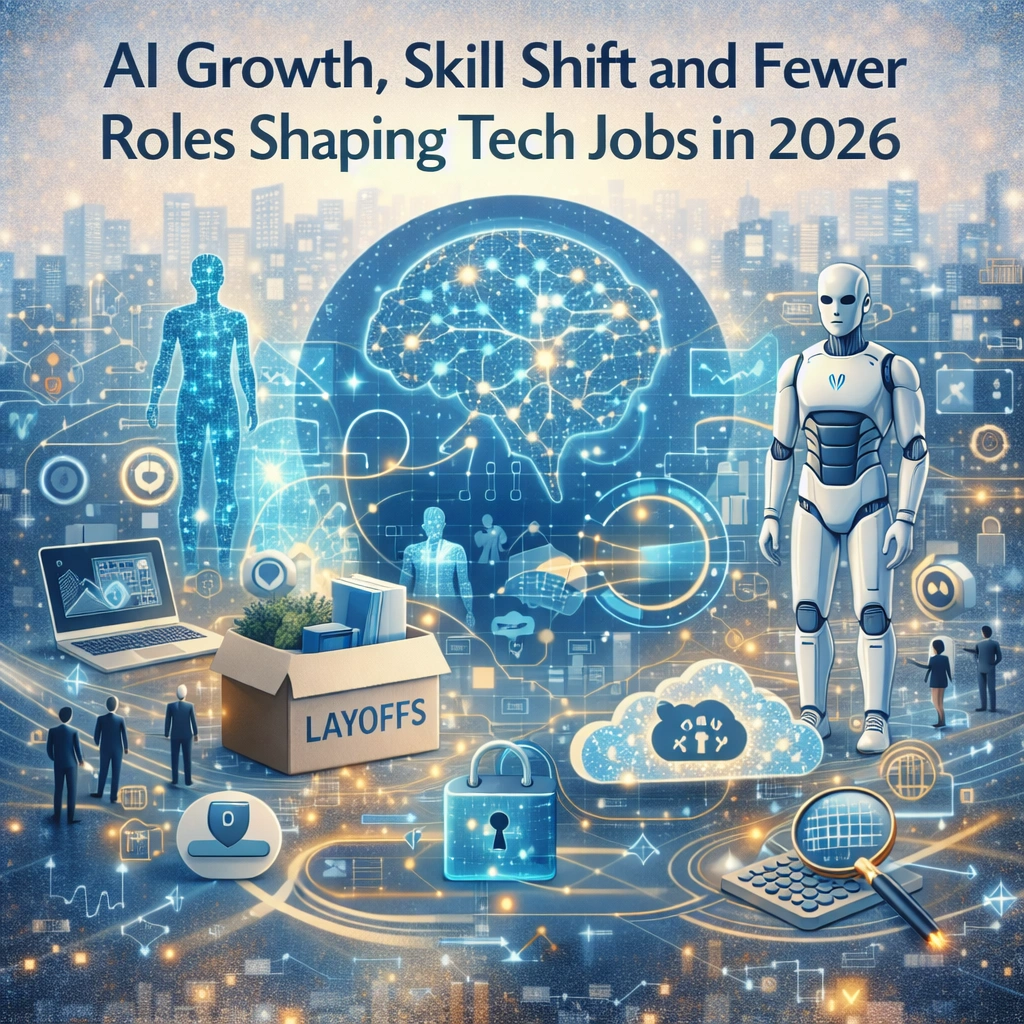
The technology job market is entering a new phase as artificial intelligence (AI) becomes deeply integrated into business operations. Companies are increasingly investing in AI technologies to improve efficiency, automate routine tasks, and develop advanced digital services. This transformation is significantly influencing how organizations hire employees, the types of roles they create, and the skills they prioritize. As AI adoption expands across industries, the technology workforce is undergoing structural change.
While investment in AI continues to grow, the transition is not always smooth. Many companies are restructuring teams, reducing certain roles, and searching for employees with specialized skills in data science, machine learning, and cloud computing. At the same time, professionals in the technology sector must adapt to new expectations by upgrading their skills and learning to work alongside intelligent systems. The result is a job market where opportunity still exists but requires greater adaptability and continuous learning.
Table of Contents
ToggleRapid Growth of Artificial Intelligence in the Tech Industry
Artificial intelligence has become one of the most influential forces driving change in the technology sector. Businesses across industries are adopting AI tools to analyze large amounts of data, automate repetitive tasks, and improve decision-making. As a result, organizations are increasing investments in AI infrastructure, software development, and machine learning systems.
This growth is creating demand for professionals who can build and manage AI-driven platforms. Roles related to data science, machine learning engineering, and AI system development are expanding rapidly. In many regions, AI job postings have increased significantly as companies seek skilled professionals capable of designing intelligent technologies. However, the growth of AI does not automatically translate into more jobs in every area. Instead, it is transforming how work is performed and what expertise companies require.
Changing Hiring Patterns in Technology Companies
Technology companies are changing their hiring strategies as they incorporate AI into their operations. Instead of hiring large teams for traditional roles, many organizations are focusing on smaller teams with specialized expertise. Employers are increasingly searching for professionals who understand AI tools, cloud platforms, and data-driven systems.
This shift means that hiring is becoming more selective. Companies are prioritizing quality of skills rather than quantity of workers. In some cases, organizations are reducing entry-level positions because AI systems can automate certain tasks that junior employees previously performed. The result is a hiring environment where competition for technology roles is higher, and employers expect candidates to possess advanced digital skills and practical experience.
Shift Toward New and Advanced Skill Requirements
One of the most noticeable changes in the technology job market is the shift in skill requirements. As AI becomes more integrated into workflows, employers are seeking professionals with technical expertise in machine learning, data analytics, cybersecurity, and cloud computing. These skills enable organizations to design, deploy, and maintain complex AI-driven systems.
At the same time, the importance of soft skills such as critical thinking, collaboration, and problem-solving is increasing. Studies show that AI-related roles often require higher levels of cognitive and social skills because professionals must interpret complex data and work with interdisciplinary teams. In many organizations, human creativity and strategic decision-making complement the capabilities of intelligent machines.
Reduction of Some Traditional Tech Roles
Although AI is creating new opportunities, it is also reducing the need for certain traditional technology roles. Automation tools can perform tasks such as code generation, data processing, and software testing more efficiently than before. As a result, some routine tasks previously handled by entry-level developers or analysts are becoming automated.
Industry reports highlight that many companies are restructuring their workforces as they adopt AI-driven systems. Some technology firms have announced layoffs or hiring freezes while investing heavily in AI technologies and infrastructure.
However, experts emphasize that AI does not simply eliminate jobs. Instead, it changes the composition of the workforce. Employees whose roles involve repetitive tasks may need to transition into more strategic or analytical positions that require human judgment and creativity.
Increasing Importance of Continuous Learning and Upskilling
As technology evolves rapidly, continuous learning has become essential for professionals working in the tech industry. Workers must regularly update their knowledge to remain competitive in an AI-driven job market. Learning new programming languages, understanding AI tools, and gaining expertise in data analysis are becoming necessary career development strategies.
Many companies are also investing in training programs to help employees develop AI-related skills. Upskilling initiatives focus on preparing workers to collaborate with intelligent systems rather than compete against them. This approach allows organizations to retain experienced employees while adapting to technological change.
For individuals, adopting a lifelong learning mindset is increasingly important. Professionals who actively develop new digital skills are more likely to succeed in the evolving technology workforce.
The Future of Tech Employment in the AI Era
Looking ahead, the influence of AI on the job market is expected to continue growing. Research indicates that while automation may eliminate some roles, it will also create new occupations that require advanced technological expertise. Global workforce studies suggest that many new jobs could emerge in fields related to AI, data science, cybersecurity, and digital infrastructure.
At the same time, companies are redesigning organizational structures to integrate human workers with AI-powered systems. In these environments, employees will focus on tasks that require creativity, leadership, ethical judgment, and complex problem-solving. The collaboration between humans and intelligent machines is likely to define the next stage of technological employment.
Conclusion
The technology job market in 2026 is undergoing significant transformation as artificial intelligence reshapes hiring patterns, skill requirements, and workforce structures. While companies continue to invest heavily in AI, the transition has introduced challenges such as fewer traditional roles and increased competition for specialized positions.
Despite these disruptions, opportunities remain strong for professionals who adapt to the changing landscape. By developing advanced technical skills and embracing continuous learning, workers can remain valuable in an AI-driven world. Ultimately, the future of technology employment will depend on the ability of both organizations and individuals to balance innovation with human expertise.
wagqdy.com wagqdy.com wagqdy.com wagqdy.com wagqdy.com wagqdy.com wagqdy.com wagqdy.com wagqdy.com wagqdy.com wagqdy.com wagqdy.com wagqdy.com wagqdy.com wagqdy.com wagqdy.com wagqdy.com wagqdy.com wagqdy.com wagqdy.com wagqdy.com wagqdy.com wagqdy.com wagqdy.com wagqdy.com wagqdy.com wagqdy.com wagqdy.com wagqdy.com wagqdy.com wagqdy.com wagqdy.com wagqdy.com wagqdy.com wagqdy.com wagqdy.com wagqdy.com wagqdy.com wagqdy.com wagqdy.com wagqdy.com wagqdy.com wagqdy.com wagqdy.com wagqdy.com wagqdy.com wagqdy.com wagqdy.com wagqdy.com wagqdy.com wagqdy.com wagqdy.com wagqdy.com wagqdy.com wagqdy.com wagqdy.com wagqdy.com wagqdy.com wagqdy.com wagqdy.com wagqdy.com wagqdy.com wagqdy.com wagqdy.com wagqdy.com wagqdy.com wagqdy.com wagqdy.com wagqdy.com wagqdy.com wagqdy.com wagqdy.com wagqdy.com wagqdy.com wagqdy.com wagqdy.com wagqdy.com wagqdy.com wagqdy.com wagqdy.com wagqdy.com wagqdy.com wagqdy.com wagqdy.com wagqdy.com wagqdy.com wagqdy.com wagqdy.com wagqdy.com wagqdy.com wagqdy.com wagqdy.com wagqdy.com wagqdy.com wagqdy.com wagqdy.com wagqdy.com wagqdy.com wagqdy.com wagqdy.com wagqdy.com wagqdy.com wagqdy.com wagqdy.com wagqdy.com wagqdy.com wagqdy.com wagqdy.com wagqdy.com wagqdy.com wagqdy.com wagqdy.com wagqdy.com wagqdy.com wagqdy.com wagqdy.com wagqdy.com wagqdy.com wagqdy.com wagqdy.com wagqdy.com wagqdy.com wagqdy.com wagqdy.com wagqdy.com wagqdy.com wagqdy.com wagqdy.com wagqdy.com wagqdy.com wagqdy.com wagqdy.com wagqdy.com wagqdy.com wagqdy.com wagqdy.com wagqdy.com wagqdy.com wagqdy.com wagqdy.com wagqdy.com wagqdy.com wagqdy.com wagqdy.com wagqdy.com wagqdy.com wagqdy.com wagqdy.com wagqdy.com wagqdy.com wagqdy.com wagqdy.com wagqdy.com wagqdy.com wagqdy.com wagqdy.com wagqdy.com wagqdy.com wagqdy.com wagqdy.com wagqdy.com wagqdy.com wagqdy.com wagqdy.com wagqdy.com wagqdy.com wagqdy.com