Bank lockers have long been considered one of the safest places to store valuable possessions such as jewelry, important documents, and family heirlooms. Many individuals rely on bank lockers to protect their assets from theft, fire, or accidental loss at home. However, questions often arise about what happens if valuables stored in a bank locker go missing. Can insurance compensate for the loss? What are the responsibilities of banks and customers in such situations?
Understanding how insurance coverage works in relation to bank lockers is essential for anyone who uses this facility. In recent years, financial regulators and courts have emphasized the need for clearer rules and better consumer awareness. Customers must understand both the protection offered by banks and the limitations that exist when it comes to safeguarding items stored inside lockers.
Table of Contents
ToggleUnderstanding the Purpose of Bank Lockers
Bank lockers are designed to provide a secure storage facility within bank premises. Customers rent these lockers by paying an annual fee, and they can store valuables that they want to keep protected from potential risks such as burglary or fire at home. Banks typically provide lockers of different sizes depending on the needs of the customer.
While lockers are stored inside strong vaults equipped with security systems, surveillance cameras, and restricted access, the bank generally does not know what items customers place inside them. This secrecy is part of the locker’s privacy feature. Customers maintain control over their belongings and only they can access the locker using a key or authentication method provided by the bank.
However, because banks do not keep an inventory of the contents inside lockers, it creates a complicated situation when valuables go missing. Determining responsibility and proving the value of lost items becomes a challenge for both the customer and the bank.
Who Is Responsible If Items Go Missing?
When valuables disappear from a locker, the first question that arises is who is responsible for the loss. Historically, many banks treated lockers as a rental service rather than a custody service. This meant banks often argued that they were not responsible for the contents stored by customers.
However, legal developments and regulatory guidelines have gradually clarified the responsibilities of banks. Financial regulators have emphasized that banks cannot completely escape liability if negligence on their part leads to loss or theft. For example, if a locker is tampered with due to poor security measures, or if unauthorized access occurs because of the bank’s procedural lapses, the bank may be held responsible.
At the same time, customers also have responsibilities. They must ensure that they follow locker operation rules, keep keys safe, and inform the bank promptly if the locker key is lost or compromised. If a customer’s negligence leads to the loss, the bank’s liability may be limited.
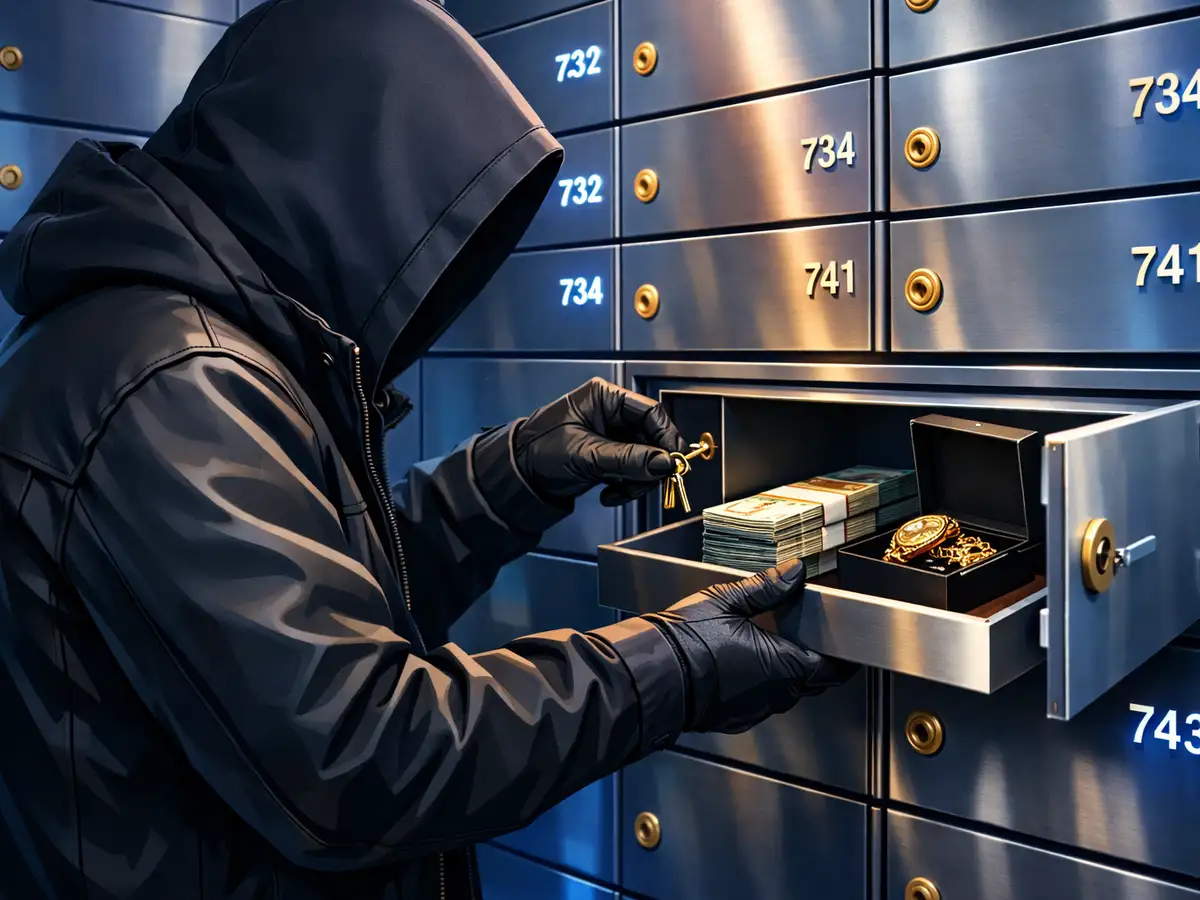
Regulatory Guidelines on Bank Locker Safety
In India, regulatory authorities have issued specific guidelines to improve the safety and accountability of bank locker services. These guidelines require banks to implement strong security measures, maintain records of locker access, and ensure that lockers are properly monitored.
Banks are required to maintain a transparent locker agreement that clearly explains the rights and responsibilities of both the bank and the customer. The agreement must also specify how disputes or losses will be handled.
Another key requirement is that banks must take adequate precautions to prevent unauthorized access. This includes maintaining proper identification procedures, keeping logs of locker visits, and ensuring that staff follow strict security protocols. These measures are intended to reduce the risk of theft or mismanagement.
If a loss occurs due to a bank’s negligence—such as failure to maintain security systems—the bank may be liable to compensate the customer according to regulatory provisions and legal rulings.
Can Insurance Cover the Loss of Locker Valuables?
Insurance can play a significant role in protecting valuables stored in bank lockers. However, the extent of coverage depends on the type of insurance policy a customer holds. Standard bank locker rentals do not automatically include insurance coverage for the contents inside the locker.
Customers who wish to protect their valuables often purchase separate insurance policies. These policies may cover items such as jewelry, precious metals, and important artifacts against risks like theft, burglary, fire, or accidental damage.
For insurance coverage to apply, the policyholder must usually declare the value of the items and sometimes provide documentation or proof of ownership. In case of loss, the insurer will evaluate the claim based on the policy terms and the evidence provided.
Without such insurance, recovering the full value of lost items can be difficult. Even if the bank is found liable, compensation may be limited and may not fully cover the value of high-priced jewelry or rare items.
Challenges in Proving the Loss
One of the biggest challenges in bank locker disputes is proving what exactly was stored inside the locker. Since banks do not maintain a record of the contents, customers must rely on their own documentation to prove the value of the items.
Receipts, valuation certificates, photographs, and insurance documents can help establish ownership and value. Without these records, it becomes difficult to determine the actual loss. Courts and insurance companies generally require some form of proof before approving compensation.
This issue highlights the importance of proper documentation. Customers who store valuables should keep detailed records and update them periodically. Doing so can make the claims process smoother if a dispute arises.
Steps Customers Should Take to Protect Their Valuables
To minimize the risk of loss, customers should follow several best practices when using bank lockers. First, they should carefully read the locker agreement and understand the bank’s policies regarding security and liability.
Second, it is advisable to maintain an inventory of items stored inside the locker. Keeping photographs, purchase receipts, and valuation certificates can help establish proof of ownership. These records should be stored safely outside the locker.
Third, customers should consider purchasing specialized insurance policies that cover valuables stored in lockers. Such policies provide an additional layer of financial protection if something goes wrong.
Finally, customers should regularly check their locker to ensure everything is intact and immediately report any suspicious activity or damage to the bank authorities.
The Role of Banks in Ensuring Customer Confidence
Banks play a crucial role in maintaining trust in locker services. Customers expect banks to provide not only secure storage but also transparent policies regarding safety and compensation.
Modern banking institutions are increasingly investing in advanced security systems, including biometric authentication, digital access logs, and surveillance technology. These measures help reduce the chances of unauthorized access and improve accountability.
Banks are also focusing on educating customers about locker safety and encouraging them to take preventive steps. Clear communication and adherence to regulatory standards help build customer confidence and reduce disputes.
Conclusion
Bank lockers remain one of the most secure ways to store valuables, but they are not entirely risk-free. If valuables vanish from a locker, determining responsibility can be complicated due to the lack of records about the contents. Regulatory guidelines have strengthened the accountability of banks, especially in cases where negligence leads to loss.
However, customers must also take proactive steps to protect themselves. Maintaining proper documentation and purchasing insurance for high-value items can provide essential financial protection. Insurance policies designed for valuables can cover losses that might otherwise be difficult to recover through legal claims alone.
Ultimately, a combination of strong bank security, clear regulations, and informed customers is necessary to ensure that locker services remain a safe and reliable option for storing precious belongings.
suplake.com suplake.com suplake.com suplake.com suplake.com suplake.com suplake.com suplake.com suplake.com suplake.com suplake.com suplake.com suplake.com suplake.com suplake.com suplake.com suplake.com suplake.com suplake.com suplake.com suplake.com suplake.com suplake.com suplake.com suplake.com suplake.com suplake.com suplake.com suplake.com suplake.com suplake.com suplake.com suplake.com suplake.com suplake.com suplake.com suplake.com suplake.com suplake.com suplake.com suplake.com suplake.com suplake.com suplake.com suplake.com suplake.com suplake.com suplake.com suplake.com suplake.com suplake.com suplake.com suplake.com suplake.com suplake.com suplake.com suplake.com suplake.com suplake.com suplake.com suplake.com suplake.com suplake.com suplake.com suplake.com suplake.com suplake.com suplake.com suplake.com suplake.com suplake.com suplake.com suplake.com suplake.com suplake.com suplake.com suplake.com suplake.com suplake.com suplake.com suplake.com suplake.com suplake.com suplake.com suplake.com suplake.com suplake.com suplake.com suplake.com suplake.com suplake.com suplake.com suplake.com suplake.com suplake.com suplake.com suplake.com suplake.com suplake.com suplake.com suplake.com suplake.com suplake.com suplake.com suplake.com suplake.com suplake.com suplake.com suplake.com suplake.com suplake.com suplake.com suplake.com suplake.com suplake.com suplake.com suplake.com suplake.com suplake.com suplake.com suplake.com suplake.com suplake.com suplake.com suplake.com suplake.com suplake.com suplake.com suplake.com suplake.com suplake.com suplake.com suplake.com suplake.com suplake.com suplake.com suplake.com suplake.com suplake.com suplake.com suplake.com suplake.com suplake.com suplake.com suplake.com suplake.com suplake.com suplake.com suplake.com suplake.com suplake.com suplake.com suplake.com suplake.com suplake.com suplake.com suplake.com suplake.com suplake.com suplake.com suplake.com suplake.com suplake.com suplake.com suplake.com suplake.com suplake.com