The rapid rise of GLP-1 weight-loss drugs has transformed obesity and diabetes treatment across the world, including India. Medicines containing semaglutide and related compounds are increasingly being prescribed for weight management, blood sugar control, and metabolic health improvement. While these drugs have shown remarkable benefits for many patients, doctors are now warning that regular eye screening is becoming an essential part of treatment monitoring.
Ophthalmologists, endocrinologists, and diabetes specialists are raising concerns because some patients using GLP-1 drugs have experienced eye-related complications, particularly those already living with diabetes or pre-existing retinal conditions. Experts say the issue is not necessarily that the drugs directly damage eyesight in most people, but that rapid blood sugar changes and underlying health risks may worsen existing eye problems.
As awareness grows, more hospitals and clinics in India are recommending comprehensive eye examinations before and during GLP-1 therapy. The growing concern reflects how obesity, diabetes, and vision health are deeply interconnected in modern healthcare.
Understanding What GLP-1 Drugs Are
GLP-1 receptor agonists are a class of medicines originally developed to help manage Type 2 diabetes. These drugs mimic a natural hormone in the body that regulates blood sugar, insulin production, digestion, and appetite control. Over time, researchers discovered that these medications could also help people lose significant amounts of weight.
Today, GLP-1 drugs such as semaglutide and tirzepatide are widely used for both diabetes treatment and obesity management. They work by slowing stomach emptying, reducing hunger, and improving insulin response. Many patients experience noticeable weight reduction and improved blood sugar control within months of starting treatment.
The popularity of these medicines has increased dramatically because obesity and diabetes rates continue rising globally. In India, doctors are seeing growing demand from patients seeking medically supervised weight-loss solutions. However, experts stress that these medications are powerful prescription drugs and should never be treated as cosmetic shortcuts or social media trends.
Why Eye Health Has Become a Major Concern
Doctors are now paying closer attention to eye health because some patients using GLP-1 drugs have reported visual complications, including worsening diabetic retinopathy and rare optic nerve problems. Diabetic retinopathy is a serious condition in which high blood sugar damages blood vessels in the retina, potentially leading to blindness if untreated.
Specialists say patients with poorly controlled diabetes are especially vulnerable because rapid improvements in blood sugar can sometimes temporarily worsen retinal damage. This phenomenon has been observed previously in intensive diabetes treatment programs, even before GLP-1 drugs became popular.
Some recent international studies have also explored possible links between semaglutide-based medicines and rare eye conditions such as non-arteritic anterior ischemic optic neuropathy (NAION), sometimes referred to as an “eye stroke.” Although experts emphasise that the absolute risk remains very low, doctors believe regular screening is necessary to identify problems early.
The concern is not intended to create panic but to encourage safer monitoring and responsible medical supervision.
How Rapid Blood Sugar Changes Affect Vision
One of the key reasons doctors recommend eye screening involves the speed at which GLP-1 drugs can lower blood sugar levels. When glucose levels improve rapidly after long periods of poor diabetic control, the tiny blood vessels in the retina may react unpredictably.
This can lead to temporary worsening of diabetic retinopathy symptoms in some individuals. Patients may experience blurred vision, retinal swelling, bleeding, or other complications that require prompt medical attention.
Experts explain that this does not mean the medication itself is universally harmful to the eyes. Instead, the sudden metabolic changes occurring inside the body may affect patients who already have underlying retinal disease.
For this reason, doctors now increasingly recommend baseline retinal examinations before starting GLP-1 therapy. Follow-up screenings help specialists track changes and intervene early if complications develop.
Patients with long-standing diabetes, uncontrolled blood sugar, hypertension, or previous retinal damage are considered higher-risk groups requiring closer observation.
Doctors Recommend Regular Eye Screening
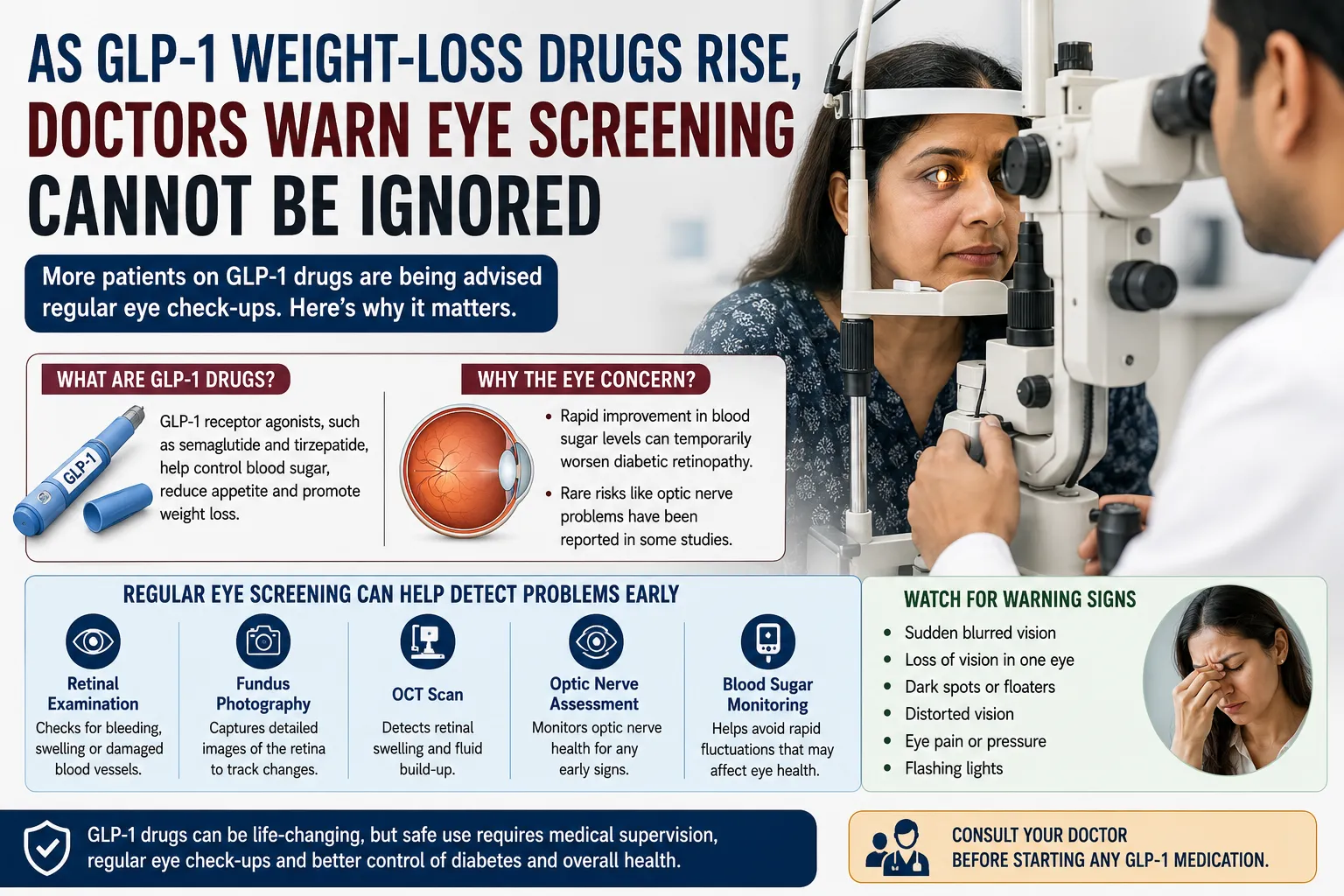
Healthcare professionals across India are encouraging patients using GLP-1 medications to undergo regular ophthalmic evaluations. These screenings help detect early retinal changes before permanent damage occurs.
A complete eye screening may include:
Retinal Examination
Doctors examine the retina to identify bleeding, swelling, or damaged blood vessels caused by diabetes-related complications. Early detection can prevent severe vision loss.
Fundus Photography
Digital retinal imaging allows specialists to compare changes over time and monitor disease progression more accurately during treatment.
Optical Coherence Tomography (OCT)
This advanced scanning technique helps detect retinal swelling and fluid accumulation that may not be visible during standard eye examinations.
Optic Nerve Assessment
Because rare optic nerve complications have been discussed in recent studies, doctors may also monitor optic nerve health in certain high-risk patients.
Blood Sugar Monitoring
Specialists emphasise that eye screening must be combined with careful glucose monitoring to reduce sudden fluctuations that may stress retinal tissues.
Doctors believe these preventive measures can significantly reduce complications while allowing patients to continue benefiting from GLP-1 therapy safely.
India Is Seeing a Surge in GLP-1 Usage
India’s growing obesity crisis and high diabetes burden have contributed to a sharp rise in GLP-1 prescriptions. The arrival of cheaper generic versions of semaglutide has also made these medicines more accessible to a wider population.
However, doctors warn that increasing popularity has also created misuse concerns. Some people are reportedly obtaining these medications without proper medical evaluation or using them purely for cosmetic weight loss.
Medical organisations and government authorities have recently issued warnings against unsupervised use of GLP-1 drugs. Experts say patients need full medical assessments before starting treatment because these medications affect multiple systems within the body.
Doctors stress that obesity management is not only about weight reduction. Patients often require comprehensive monitoring involving endocrinologists, nutritionists, cardiologists, and ophthalmologists.
The healthcare community fears that social media hype and influencer marketing may encourage unsafe self-medication practices without proper risk evaluation.
Rare Eye Risks Are Still Being Studied
Researchers worldwide are continuing to investigate the relationship between GLP-1 drugs and certain rare eye conditions. While some reports have raised concerns about optic nerve damage and sudden vision loss, experts caution that current evidence remains limited and under active review.
Most doctors agree that severe eye complications remain uncommon. However, because vision loss can be life-changing, specialists believe even rare risks deserve careful attention.
Current research is focusing on several important questions:
Are Certain Patients More Vulnerable?
Scientists are studying whether people with diabetes, hypertension, cardiovascular disease, or pre-existing retinal conditions face higher risks.
Does Dosage Matter?
Some studies suggest higher-dose weight-loss formulations may require closer monitoring compared to lower diabetes-management doses.
Is Rapid Weight Loss a Factor?
Researchers are also investigating whether rapid metabolic changes during aggressive weight reduction contribute to temporary retinal stress.
Could Long-Term Outcomes Improve?
Interestingly, some experts believe better long-term blood sugar control may ultimately benefit eye health despite short-term adjustment complications.
The scientific community expects more detailed findings in the coming years as global use of GLP-1 medications continues increasing.
Patients Should Watch for Warning Symptoms
Doctors advise patients using GLP-1 drugs to seek immediate medical attention if they notice sudden visual changes. Early diagnosis often improves treatment outcomes significantly.
Important warning signs include:
-
Sudden blurred vision
-
Loss of vision in one eye
-
Dark spots or floating shadows
-
Distorted vision
-
Difficulty reading
-
Reduced colour perception
-
Eye pain or pressure
-
Flashing lights
Experts say patients should never ignore sudden visual symptoms, even if they seem temporary or mild.
At the same time, doctors caution against unnecessary fear. Millions of people worldwide use GLP-1 medications successfully under proper medical supervision without experiencing severe eye complications.
The Importance of Responsible Medical Supervision
Medical experts strongly emphasise that GLP-1 medications should only be prescribed and monitored by qualified healthcare professionals. These drugs are highly effective for many patients, but they require careful evaluation based on individual health history.
Doctors say safe treatment should include:
-
Diabetes management plans
-
Nutritional counselling
-
Regular blood testing
-
Eye examinations
-
Lifestyle modification
-
Exercise guidance
-
Ongoing monitoring
Healthcare providers also warn against purchasing weight-loss injections through unauthorised online sellers, wellness clinics, or unregulated pharmacies.
The rise of counterfeit or improperly dosed products has become an additional concern in several countries, including India.
Final Thoughts
The growing popularity of GLP-1 weight-loss drugs marks a major shift in obesity and diabetes treatment, offering hope to millions struggling with metabolic disease. However, doctors are increasingly reminding patients that these medications require careful medical supervision, including regular eye screening.
As evidence continues emerging regarding possible retinal and optic nerve complications, healthcare experts believe prevention and monitoring are essential. The concern is especially important for individuals with diabetes, long-standing blood sugar problems, or existing eye disease.
Rather than discouraging treatment, doctors say the goal is to ensure safer use through comprehensive healthcare management. Eye examinations, blood sugar control, and professional supervision can help patients benefit from GLP-1 therapies while minimising potential risks.
The conversation surrounding GLP-1 drugs is now expanding beyond weight loss alone, highlighting the importance of viewing obesity, diabetes, cardiovascular health, and vision care as deeply connected parts of long-term medical treatment.
newstapy.com newstapy.com newstapy.com newstapy.com newstapy.com newstapy.com newstapy.com newstapy.com newstapy.com newstapy.com newstapy.com newstapy.com newstapy.com newstapy.com newstapy.com newstapy.com newstapy.com newstapy.com newstapy.com newstapy.com newstapy.com newstapy.com newstapy.com newstapy.com newstapy.com newstapy.com newstapy.com newstapy.com newstapy.com newstapy.com newstapy.com newstapy.com newstapy.com newstapy.com newstapy.com newstapy.com newstapy.com newstapy.com newstapy.com newstapy.com newstapy.com newstapy.com newstapy.com newstapy.com newstapy.com newstapy.com newstapy.com newstapy.com newstapy.com newstapy.com newstapy.com newstapy.com newstapy.com newstapy.com newstapy.com newstapy.com newstapy.com newstapy.com newstapy.com newstapy.com newstapy.com newstapy.com newstapy.com newstapy.com newstapy.com newstapy.com newstapy.com newstapy.com newstapy.com newstapy.com newstapy.com newstapy.com newstapy.com newstapy.com newstapy.com newstapy.com newstapy.com newstapy.com newstapy.com newstapy.com newstapy.com newstapy.com newstapy.com newstapy.com newstapy.com newstapy.com newstapy.com newstapy.com newstapy.com newstapy.com newstapy.com newstapy.com newstapy.com newstapy.com newstapy.com newstapy.com newstapy.com newstapy.com newstapy.com newstapy.com newstapy.com newstapy.com newstapy.com newstapy.com newstapy.com newstapy.com newstapy.com newstapy.com newstapy.com newstapy.com newstapy.com newstapy.com newstapy.com newstapy.com newstapy.com newstapy.com newstapy.com newstapy.com newstapy.com newstapy.com newstapy.com newstapy.com newstapy.com newstapy.com newstapy.com newstapy.com newstapy.com newstapy.com newstapy.com newstapy.com newstapy.com newstapy.com newstapy.com newstapy.com newstapy.com newstapy.com newstapy.com newstapy.com newstapy.com newstapy.com newstapy.com newstapy.com newstapy.com newstapy.com newstapy.com newstapy.com newstapy.com newstapy.com newstapy.com newstapy.com newstapy.com newstapy.com newstapy.com newstapy.com newstapy.com newstapy.com newstapy.com newstapy.com newstapy.com newstapy.com newstapy.com newstapy.com newstapy.com newstapy.com newstapy.com newstapy.com newstapy.com