A powerful explosion struck near a court complex in Islamabad, Pakistan, on Tuesday, killing at least 12 people and injuring more than 20 others, in what authorities are investigating as a suspected suicide attack. The blast, which occurred in the heart of the capital, has once again raised concerns about rising security threats and the resurgence of militant activities in the country.
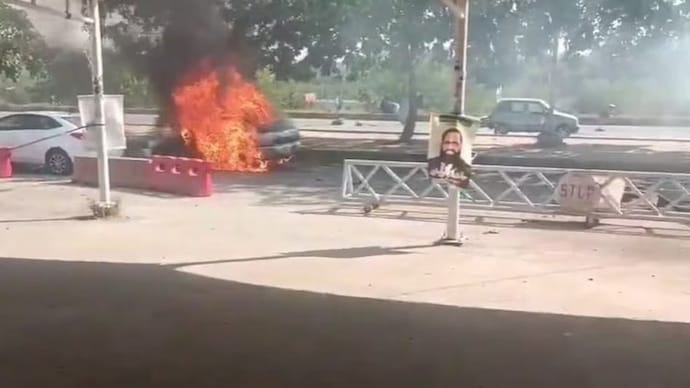
According to preliminary reports, the explosion took place near the district court complex in the Sector F-8 area of Islamabad — a zone that houses several important judicial and administrative offices. Witnesses reported hearing a loud blast that shattered nearby windows and sent plumes of smoke rising from the site.
Details of the Explosion
Early investigations by local police and bomb disposal teams suggest that the blast originated from a parked vehicle outside the court premises. Authorities suspect that a gas cylinder fitted inside the car was used as part of the explosive mechanism, though officials are also probing whether suicide bombers were involved in triggering the explosion.
Islamabad police and rescue teams quickly cordoned off the area, while emergency services rushed the injured to Pakistan Institute of Medical Sciences (PIMS) and other nearby hospitals. Among the victims were court employees, security personnel, and civilians who had gathered for routine legal proceedings when the explosion occurred.
“We are still determining the exact nature of the explosion. Initial findings point toward a possible suicide attack,” a senior Islamabad police official said.
Eyewitnesses described scenes of panic and chaos immediately after the explosion. One survivor said the blast was so strong that “cars were overturned, and debris scattered across the court complex.”
Casualties and Rescue Operations
Authorities confirmed that 12 people were killed, including two police constables and at least one lawyer. Over 20 others sustained injuries, many of them critical.
Doctors at PIMS Hospital reported that several victims suffered from severe burns and blast injuries. Emergency wards were quickly filled, and additional medical staff were called in to assist with treatment.
Rescue 1122 teams, firefighters, and bomb disposal squads worked together to secure the site. Police have urged residents to avoid the area as the investigation continues.
“Our first priority is to save lives and secure evidence from the site,” said Deputy Commissioner Islamabad in a press briefing. “We are reviewing CCTV footage to identify the suspects and determine whether this was a coordinated act of terrorism.”
mallorcavipcare.com | updateonsports.com | crankytravel.com
websitesforbetting.com | PiratesGab.com
Possible Motives Under Investigation
While the exact motive behind the attack remains unclear, intelligence officials suspect involvement of militant groups operating along Pakistan’s northwestern border regions. The attack comes amid renewed tensions between security forces and extremist outfits, some of which have been active in the Khyber Pakhtunkhwa and Balochistan regions.
Pakistan has witnessed an uptick in terror attacks over recent months, particularly targeting police convoys, government buildings, and judicial premises. Security analysts believe this could be part of an effort by militant organizations to undermine state authority and destabilize the capital.
“Islamabad has remained relatively secure compared to other regions, but this attack indicates that militants may be expanding their reach,” said a senior counterterrorism expert based in Lahore.
Government Response
Following the explosion, Prime Minister Shehbaz Sharif condemned the attack and expressed grief over the loss of lives. In a statement released by his office, he said:
“This cowardly act is an attack on justice and peace in our country. The perpetrators will be brought to justice, and all necessary measures will be taken to ensure such incidents do not recur.”
He also directed federal and provincial authorities to tighten security across Islamabad and other major cities. Interior Minister Mohsin Naqvi held an emergency meeting with police chiefs and intelligence officials to review security protocols, particularly around courts, government buildings, and public places.
Security forces were placed on high alert, and additional checkpoints were set up across the capital to monitor vehicle movement and suspicious activity.
Heightened Security and Investigation
As of Tuesday evening, Islamabad police and intelligence agencies had begun a joint investigation to trace the source of the attack. Forensic teams collected evidence from the blast site, including fragments of the vehicle, explosives residue, and surveillance footage.
Unconfirmed reports suggested that two suspects may have been seen fleeing the scene moments before the blast, though this remains under verification.
Authorities are also examining whether the attack could be linked to recent anti-terror operations carried out in Punjab and Khyber Pakhtunkhwa, where several militant hideouts were dismantled.
Witness Accounts
Witnesses described scenes of horror as the explosion ripped through the area.
One lawyer, who narrowly escaped injury, told reporters:
“I had just stepped out of the courtroom when I heard a deafening blast. The entire building shook, and people were screaming. I saw several people lying on the ground, covered in blood.”
Another witness, a court clerk, said the explosion appeared to come from a white car parked near the main gate. “There was fire and smoke everywhere. Within minutes, rescue teams arrived, but it was complete chaos.”
International Condemnation
The attack drew swift condemnation from foreign governments and international organizations. The United Nations Mission in Pakistan expressed its condolences to the victims’ families and called for collective action to address terrorism.
India’s Ministry of External Affairs also issued a brief statement condemning the violence and expressing sympathy for the victims, saying that “terrorism has no place in the civilized world.”
Neighbouring countries, including Afghanistan and China, emphasized the need for regional cooperation against extremist networks that threaten stability in South Asia.
Context: A Troubled Security Landscape
Pakistan has struggled with intermittent waves of militancy over the past two decades. Though the situation had improved significantly in recent years, sporadic attacks have resurfaced following the resurgence of extremist groups along the Pakistan-Afghanistan border.
Islamabad, as the country’s political and judicial hub, has generally been considered a high-security zone, making this attack particularly concerning.
Experts believe that militants may be attempting to send a message by targeting the judiciary — a key pillar of state authority — at a time when Pakistan faces political uncertainty, economic challenges, and increasing public discontent.
Aftermath and Public Reaction
As news of the explosion spread, social media platforms were flooded with messages of condolence and outrage. Citizens called for stricter law enforcement and improved intelligence coordination to prevent such tragedies in the future.
Civil rights organizations also urged the government to ensure that security measures do not compromise civil liberties, stressing the importance of maintaining balance between safety and freedom.
Funerals for the victims are expected to be held on Wednesday, with the government announcing compensation for the families of those killed and injured.
Conclusion
The Islamabad court blast serves as a grim reminder of the persistent threat of terrorism facing Pakistan’s capital and judiciary. While authorities continue to investigate the nature of the attack, it underscores the urgent need for enhanced intelligence sharing, counterterrorism coordination, and community vigilance.
For a city that has long been a symbol of Pakistan’s stability, this tragedy reveals just how fragile peace remains — and how critical it is to remain united against forces that seek to destabilize it.