Introduction
In a dramatic escalation of tensions between the US President and one of the world’s most respected public broadcasters, Donald Trump has announced plans to sue the BBC for a staggering $5 billion. The controversy erupted after the BBC aired an edited version of Trump’s speech, which allegedly presented misleading context and caused reputational harm. Even though the BBC issued a public apology acknowledging the error, Trump has called the apology “inadequate”, leading to one of the most high-profile media–political clashes in recent years.
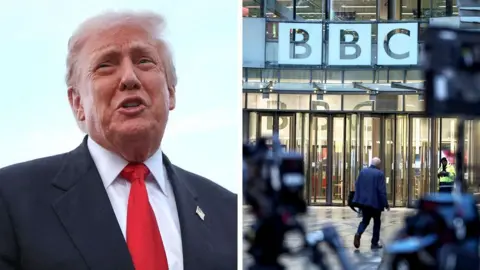
This incident has reignited debates surrounding press freedom, political accountability, broadcasting ethics, and the legal boundaries of journalism in the digital age.
What Triggered the Dispute?
The controversy began when the BBC aired a segment featuring a speech by Donald Trump during an event earlier this month. According to Trump’s legal team, the broadcaster removed key parts of the speech, resulting in what they describe as a “manipulated narrative”. The edited clip, which quickly circulated across social media platforms, was criticized by some viewers who claimed that it misrepresented Trump’s stance on a sensitive issue.
The BBC later acknowledged the editing mistake, calling it a “production oversight”, and issued an apology both publicly and through its official channels. However, the damage—according to Trump—was already done.
Trump’s Reaction and Legal Stand
Trump responded strongly, accusing the BBC of intentionally distorting his words to influence public opinion. His lawyers have prepared a lawsuit demanding up to $5 billion in damages, claiming:
-
Defamation
-
Loss of public trust
-
Damage to political credibility
-
Financial harm impacting future engagements and endorsements
In a statement, Trump asserted that media organisations must be held accountable for what he described as “reckless editing practices” that mislead the public. He further added that an apology cannot reverse the widespread impact of the edited video, which had already gone viral by the time the BBC issued its correction.
BBC’s Response
The BBC responded with a detailed clarification explaining the technical error. The broadcaster insisted there was no political motive behind the mistake and reiterated its commitment to fair reporting. It also expressed regret for the inconvenience caused and reaffirmed that it had taken steps to prevent similar issues in the future.
However, the BBC has not commented on the impending lawsuit. Legal experts believe that the broadcaster may argue journalistic protection, lack of malicious intent, and correction issued promptly as part of its defense.
Reactions From Media and Political Circles
The case has triggered intense reactions across the globe:
1. Media Organizations
Several international media outlets have expressed concern that Trump’s lawsuit could set a precedent for political leaders to challenge editorial decisions through massive lawsuits. Some argue that such actions may intimidate journalists and reduce independent reporting.
2. Political Allies
Trump’s supporters have applauded his decision, claiming mainstream media often portrays him unfairly. They believe the lawsuit is necessary to discourage biased reporting.
3. Opposition Voices
Critics of Trump, however, argue that he is using the moment to attack free press and distract from ongoing political challenges. They also question whether the amount claimed—$5 billion—is justified.
Impact on Media Ethics Debate
This incident has once again brought media ethics under the spotlight. In an era where clips are frequently shortened for time and clarity, determining what constitutes intentional manipulation versus editing for format has become increasingly difficult.
Key issues raised include:
-
Should broadcasters be penalized for editorial mistakes?
-
How quickly should corrections be issued?
-
Do public figures face disproportionate consequences for minor editing errors?
-
What safeguards should media houses maintain to prevent similar incidents?
The controversy has also sparked conversations about the need for AI-assisted fact-checking, more transparent editing practices, and stricter quality-control systems in newsrooms.
Potential Legal Outcomes
Legal experts suggest several possible outcomes:
1. Out-of-Court Settlement
Many predict the case might be settled privately, with the BBC offering compensation or issuing a stronger apology to avoid prolonged legal battles.
2. Case Dismissed
If courts find no malicious intent and accept that the correction was timely, the case could be dismissed early.
3. High-Profile Trial
Should it proceed to trial, the case could become one of the biggest media–political legal battles in history, potentially rewriting how digital-era broadcasting mistakes are judged.
4. Reduced Claim
Even if Trump wins, the $5 billion figure may not be fully granted. Courts often reduce compensation amounts based on actual quantifiable damage.
Why This Matters Globally
This isn’t just a dispute between Trump and the BBC—it reflects how fragile trust between politicians and the media has become. With misinformation, selectively edited clips, and deepfakes becoming more common, the line between truth and distortion grows thinner every day.
Globally, the case may influence:
-
How broadcasters edit political speeches
-
How quickly corrections must be issued
-
Legal protections available to media houses
-
How political leaders handle perceived media bias
Furthermore, audiences are increasingly questioning whether what they see online represents the full truth or just a curated narrative.
Conclusion
The Trump–BBC dispute marks another chapter in the ongoing tension between prominent political figures and major news organizations. While the BBC’s apology acknowledged the error, Trump’s response suggests a growing intolerance for even unintentional mistakes that can shape public perception. As the world watches, this legal battle has the potential to influence international media practices, press freedom, and political communications for years to come.
Regardless of the lawsuit’s outcome, one thing is clear: the era of unchecked editing is fading fast, and accountability—both political and journalistic—is more critical than ever.
moviesdebate.com moviesdebate.com moviesdebate.com moviesdebate.com moviesdebate.com moviesdebate.com moviesdebate.com moviesdebate.com moviesdebate.com moviesdebate.com moviesdebate.com moviesdebate.com moviesdebate.com moviesdebate.com moviesdebate.com moviesdebate.com moviesdebate.com moviesdebate.com moviesdebate.com moviesdebate.com moviesdebate.com moviesdebate.com moviesdebate.com moviesdebate.com moviesdebate.com moviesdebate.com moviesdebate.com moviesdebate.com moviesdebate.com moviesdebate.com moviesdebate.com moviesdebate.com moviesdebate.com moviesdebate.com moviesdebate.com moviesdebate.com moviesdebate.com moviesdebate.com moviesdebate.com moviesdebate.com moviesdebate.com moviesdebate.com moviesdebate.com moviesdebate.com moviesdebate.com moviesdebate.com moviesdebate.com moviesdebate.com moviesdebate.com moviesdebate.com moviesdebate.com moviesdebate.com moviesdebate.com moviesdebate.com moviesdebate.com moviesdebate.com moviesdebate.com moviesdebate.com moviesdebate.com moviesdebate.com moviesdebate.com moviesdebate.com moviesdebate.com moviesdebate.com moviesdebate.com moviesdebate.com moviesdebate.com moviesdebate.com moviesdebate.com moviesdebate.com moviesdebate.com moviesdebate.com moviesdebate.com moviesdebate.com moviesdebate.com moviesdebate.com moviesdebate.com moviesdebate.com moviesdebate.com moviesdebate.com moviesdebate.com moviesdebate.com moviesdebate.com moviesdebate.com moviesdebate.com moviesdebate.com moviesdebate.com moviesdebate.com moviesdebate.com moviesdebate.com moviesdebate.com moviesdebate.com moviesdebate.com moviesdebate.com moviesdebate.com moviesdebate.com moviesdebate.com moviesdebate.com moviesdebate.com moviesdebate.com moviesdebate.com moviesdebate.com moviesdebate.com moviesdebate.com moviesdebate.com moviesdebate.com moviesdebate.com moviesdebate.com moviesdebate.com moviesdebate.com moviesdebate.com moviesdebate.com moviesdebate.com moviesdebate.com moviesdebate.com moviesdebate.com moviesdebate.com moviesdebate.com moviesdebate.com moviesdebate.com moviesdebate.com moviesdebate.com moviesdebate.com moviesdebate.com moviesdebate.com moviesdebate.com moviesdebate.com moviesdebate.com moviesdebate.com moviesdebate.com moviesdebate.com moviesdebate.com moviesdebate.com moviesdebate.com moviesdebate.com moviesdebate.com moviesdebate.com moviesdebate.com moviesdebate.com moviesdebate.com moviesdebate.com moviesdebate.com moviesdebate.com moviesdebate.com moviesdebate.com moviesdebate.com moviesdebate.com moviesdebate.com moviesdebate.com moviesdebate.com moviesdebate.com moviesdebate.com moviesdebate.com moviesdebate.com moviesdebate.com moviesdebate.com moviesdebate.com moviesdebate.com moviesdebate.com moviesdebate.com moviesdebate.com moviesdebate.com moviesdebate.com moviesdebate.com moviesdebate.com moviesdebate.com moviesdebate.com